
 Sally Roberts
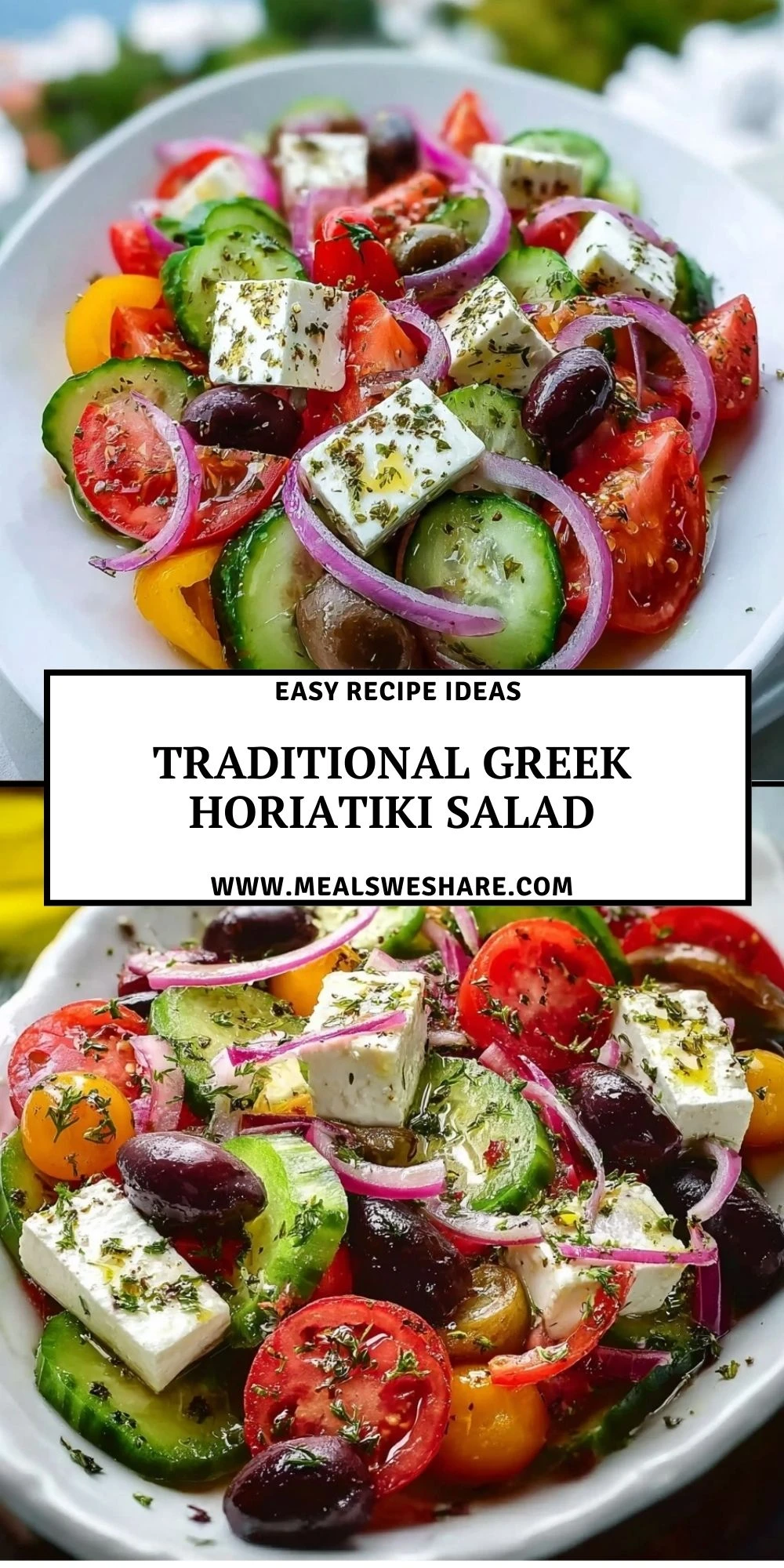
Sun-ripened tomatoes, cool cucumbers, briny Kalamata olives, and creamy blocks of feta all tumble together in this Traditional Greek Horiatiki Salad. It’s the kind of vibrant, no-lettuce salad you’ll find on village tables all over Greece, dressed simply with good olive oil, oregano, and a squeeze of tangy red wine vinegar.

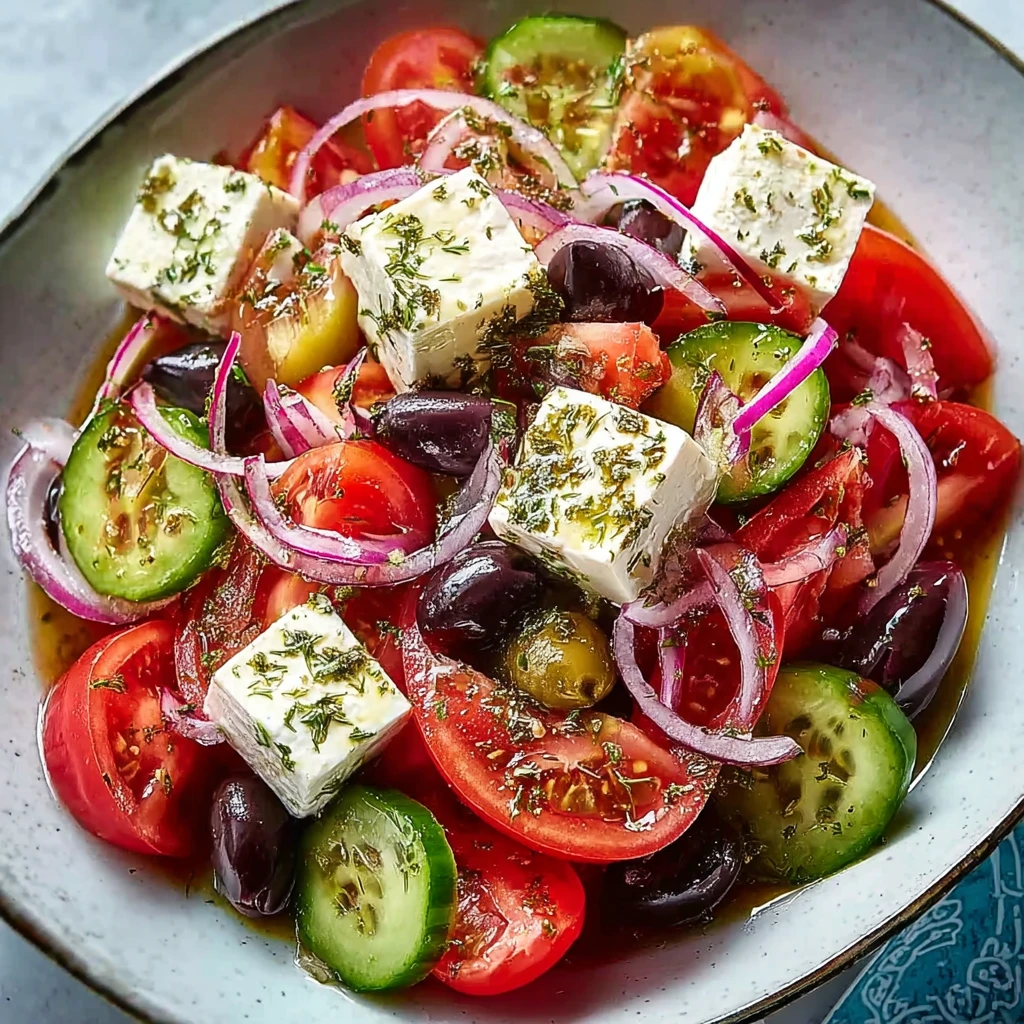
This rustic salad is all about bold flavor with almost no effort. Everything is chopped into generous pieces, lightly seasoned, and left to mingle so the juices from the tomatoes and cucumbers mix with the olive oil to create the most incredible natural dressing. Serve it as a fresh side dish, a light lunch, or pile it onto warm crusty bread for an easy Mediterranean-style meal.
Why You’ll Love This Traditional Greek Horiatiki Salad
Horiatiki literally means “village-style,” and that’s exactly what this salad delivers: unfussy, honest ingredients that taste like summer in every bite. With no cooking required, it comes together in about 15 minutes but looks like something from a seaside taverna.
This salad also happens to be naturally vegetarian and gluten-free, packed with fresh vegetables, heart-healthy olive oil, and protein-rich feta cheese. It’s a perfect make-ahead option for parties because the flavors only get better as they sit, and it pairs beautifully with everything from grilled meats to simple pasta.
What Makes a Traditional Greek Horiatiki Salad Authentic?
A true Greek Horiatiki Salad is defined by its simplicity and the quality of its ingredients. You won’t find lettuce or complicated dressings here—just chunky pieces of tomato, cucumber, red onion, green bell pepper, Kalamata olives, and a thick slab or cubes of feta on top. The “dressing” is nothing more than extra virgin olive oil, red wine vinegar or lemon, dried oregano, and a pinch of salt and pepper.
Authenticity also comes from how you cut and assemble the salad. The vegetables are sliced into larger, rustic pieces rather than finely diced, and the feta is left in big cubes or a single block so everyone can break off their own bite. The result is a salad that feels hearty, shareable, and full of character.
Ingredients for the Traditional Greek Horiatiki Salad
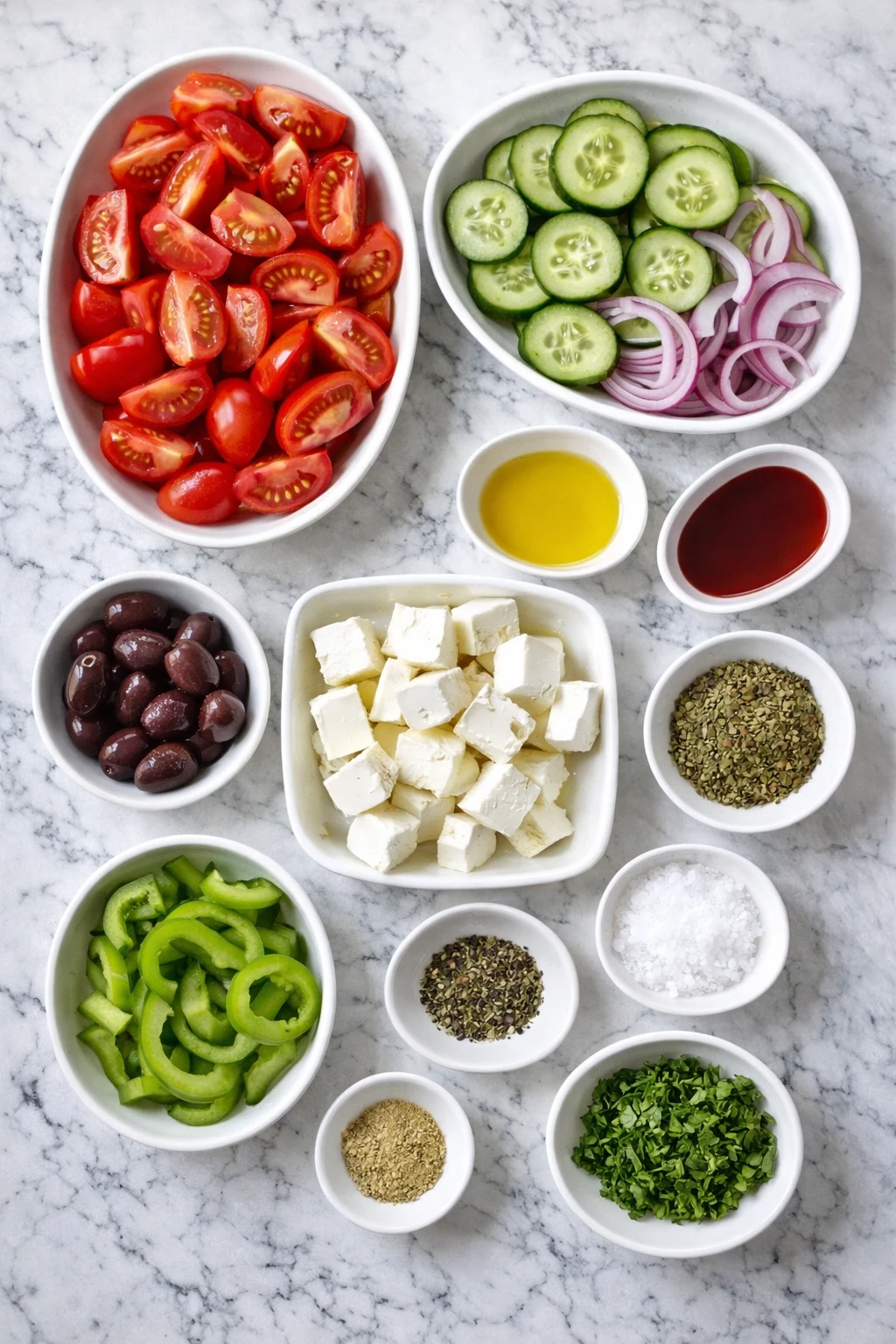
Before you start chopping, it helps to know why each ingredient matters in this classic Greek salad. Because the recipe is so simple, every component plays an important role in flavor and texture.
- Ripe tomatoes – Juicy tomatoes are the heart of the salad and form the base of the natural dressing as their juices mix with the olive oil.
- Cucumber – Adds refreshing crunch and coolness, balancing the richness of the feta and olive oil.
- Red onion – Thin slices of red onion give a sharp, slightly sweet bite that lifts all the flavors.
- Green bell pepper – Traditional in Horiatiki, it brings a crisp texture and mild bitterness that keeps the salad from tasting too sweet.
- Kalamata olives – Provide that signature salty, briny note and a wonderful chewy texture.
- Feta cheese – Creamy, tangy feta is the star protein and adds a luxurious richness to every bite.
- Extra virgin olive oil – A high-quality olive oil is essential; it forms the main body of the dressing and carries all the flavors.
- Red wine vinegar or fresh lemon juice – Adds bright acidity to balance the fat from the olive oil and cheese.
- Dried oregano – Classic Greek seasoning that gives the salad its distinctive herbal aroma.
- Sea salt and freshly ground black pepper – Just a little seasoning wakes up all the natural flavors of the vegetables.
- Fresh parsley (optional) – A sprinkle of fresh herbs at the end adds color and a pop of freshness.
How To Make the Traditional Greek Horiatiki Salad
A little chopping is all that stands between you and this colorful, shareable bowl of goodness. Follow these steps for authentic texture and maximum flavor.
Step 1: Prepare the Vegetables
Slice the tomatoes into wedges or thick chunks so they stay juicy and meaty. Cut the cucumber into rounds or half-moons, depending on size. Thinly slice the red onion and green bell pepper into rings or strips. Add everything to a large shallow bowl or serving platter so the ingredients can spread out rather than pile too high.
Step 2: Add the Olives and Feta
Scatter the Kalamata olives over the vegetables. Place the feta on top, either as a single thick block or cut into large cubes. Keeping the feta in big pieces feels more traditional and lets everyone spoon or break off what they like.
Step 3: Season Generously
Drizzle the vegetables and feta with extra virgin olive oil, making sure everything glistens. Splash over the red wine vinegar or squeeze fresh lemon juice, then sprinkle with dried oregano, sea salt, and freshly ground black pepper. Season lightly at first; you can always add more salt once you’ve tasted the salad, especially since feta and olives are naturally salty.
Step 4: Let the Flavors Meld
If you have a few minutes, let the salad rest at room temperature for 10–15 minutes. During this time, the tomato juices mingle with the olive oil and vinegar, creating a flavorful dressing at the bottom of the bowl.
Step 5: Garnish and Serve
Just before serving, give everything a gentle toss if you prefer the feta more broken up, or leave it mostly intact for a more rustic look. Sprinkle with fresh parsley, if using, and serve immediately with plenty of crusty bread for soaking up the delicious juices.
Serving and Storing This Traditional Greek Horiatiki Salad
This salad makes a generous side for 4 people or a light main course for 2–3 when served with bread or another protein. Because it’s sturdy and full of chunky vegetables, it’s ideal for potlucks, picnics, and backyard barbecues.
Serve the salad slightly cool or at room temperature so the flavors of the olive oil, tomatoes, and feta really shine. If you’re planning to serve it later, you can prep the vegetables up to a day in advance and store them separately. Combine with the feta, olives, and dressing about 30 minutes before you’re ready to eat.
Leftovers can be stored in an airtight container in the fridge for up to 2 days. The vegetables will soften as they sit, but the flavors become even more intense. If the salad releases a lot of liquid, simply toss it again before serving or spoon the juices over grilled meat or bread.
What to Serve With Traditional Greek Horiatiki Salad?
Grilled Chicken or Lamb
The bright, acidic flavors of Horiatiki Salad are the perfect match for rich grilled meats like chicken souvlaki or lamb chops. The salad cuts through the fat and adds a refreshing bite to every plate.
Warm Pita Bread or Crusty Loaf
Always serve this salad with something to soak up the juices. Toasted pita triangles or a loaf of rustic bread make it feel like a complete meal and turn the tomato-olive oil mixture into the best dipping sauce.
Mediterranean Seafood Dishes
Pair your salad with simply seasoned grilled fish or shrimp. It’s also wonderful alongside recipes like Mediterranean salmon or shrimp skewers, giving your meal a fresh, coastal feel.
Mezze-Style Appetizer Spread
Create a full Mediterranean spread by setting your Horiatiki Salad next to creamy dips, roasted vegetables, and finger foods. Think hummus, tzatziki, dolmas, and crispy bites for a colorful table everyone can graze from.
Frequently Asked Questions
Can I make Horiatiki Salad ahead of time?
Yes, you can prepare parts of the salad in advance. Chop the tomatoes, cucumbers, bell pepper, and onion and store them in separate containers in the fridge for up to 24 hours. Wait to add the feta, olives, olive oil, and vinegar until 30 minutes before serving so the vegetables stay crisp and the cheese holds its texture.
What kind of feta is best for this salad?
Look for feta that is sold in brine, ideally made from sheep’s milk or a blend of sheep’s and goat’s milk. It tends to be creamier and more flavorful than pre-crumbled feta. Avoid low-fat feta if you can; the richness of full-fat cheese is important for the authentic taste of Horiatiki Salad.
Do I have to use Kalamata olives?
Kalamata olives are traditional and bring a deep, fruity saltiness that’s hard to beat, but you can substitute other black olives if needed. Just make sure they’re pitted and have good flavor. If your olives are very salty, you can rinse them briefly under cool water before adding them to the salad.
Can I add lettuce or other vegetables?
Classic Horiatiki Salad never includes lettuce, but you can add other vegetables if you’re not aiming for strict authenticity. Slices of radish, cherry tomatoes in different colors, or even a handful of peppery arugula can be delicious. Think of the original recipe as your base and customize it to your taste.
How can I turn this salad into a full meal?
To make this salad more filling, add grilled chicken, shrimp, or chickpeas on top for extra protein. You can also spoon the salad over cooked farro, quinoa, or orzo for a heartier grain bowl. A side of warm pita or garlic bread makes it feel like a complete Mediterranean-inspired dinner.
Save This Pin For Later
📌 Save this Traditional Greek Horiatiki Salad to your Pinterest salad or Mediterranean recipe board so you can come back to it any time.
And let me know in the comments how yours turned out. Did you keep it classic with big chunks of feta and Kalamata olives, or add your own twist with extra veggies or protein on top?
I love hearing how others make these recipes their own. Questions are welcome too—let’s help each other cook smarter and enjoy more fresh, colorful meals.
For even more Mediterranean-inspired ideas, you might also love serving this salad alongside falafel balls with tahini drizzle, Mediterranean salmon bake, or cucumber bites with smoked salmon and cream cheese from the site.
Conclusion
Traditional Greek Horiatiki Salad is proof that simple ingredients, treated well, can create something truly special. With just a bit of chopping and a drizzle of good olive oil, you get a vibrant dish that works as a side, a light main, or part of a generous mezze spread.
Keep this recipe in your back pocket for weeknights, summer cookouts, and any time you crave a fresh, no-fuss dish with big flavor. And when you’re ready for more Mediterranean and everyday cooking inspiration, be sure to explore even more recipes on Meals We Share’s Pinterest page at Meals We Share.
Traditional Greek Horiatiki Salad
- Total Time: 15
- Yield: 4 servings
- Diet: Vegetarian
Description
A bright, crisp Traditional Greek Horiatiki Salad loaded with juicy tomatoes, crunchy cucumber, briny Kalamata olives, and creamy feta is the perfect quick lunch, easy dinner side, or healthy snack when you’re craving fresh Mediterranean flavor. This no-cook salad comes together in minutes and is packed with simple ingredients, making it ideal for busy weeknights, summer gatherings, or anytime you need new breakfast ideas, dinner ideas, or a colorful easy recipe to add to your list of go-to food ideas.
Ingredients
4 medium ripe tomatoes chopped into wedges
1 large English cucumber sliced into rounds
1 small red onion thinly sliced
1 small green bell pepper thinly sliced
1 cup Kalamata olives pitted
6 ounces feta cheese cut into large cubes or left as a block
4 tablespoons extra virgin olive oil
2 tablespoons red wine vinegar
1 teaspoon dried oregano
0.5 teaspoon sea salt or to taste
0.25 teaspoon freshly ground black pepper
2 tablespoons fresh parsley chopped optional
Instructions
1. Chop the tomatoes into chunky wedges and place them in a large shallow serving bowl or platter.
2. Slice the cucumber into rounds or half moons and add them to the bowl with the tomatoes.
3. Thinly slice the red onion and green bell pepper into rings or strips and scatter them over the tomatoes and cucumber.
4. Add the Kalamata olives over the vegetables making sure they are evenly distributed.
5. Place the feta cheese on top of the salad either as a single thick block or cut into large cubes for a rustic presentation.
6. Drizzle the extra virgin olive oil evenly over the vegetables and feta until everything looks lightly coated and glossy.
7. Pour the red wine vinegar over the salad then sprinkle on the dried oregano sea salt and freshly ground black pepper.
8. Let the salad rest at room temperature for about 10 to 15 minutes so the tomato juices mingle with the olive oil and vinegar to create a flavorful dressing.
9. Just before serving gently toss the salad if you like the feta more broken up or leave it mostly intact for a traditional look.
10. Garnish with chopped fresh parsley if using and serve with crusty bread or warm pita to soak up the delicious juices.
Notes
Use the ripest sweetest tomatoes you can find since their juices create much of the dressing and flavor for the salad.
For the best taste choose feta sold in brine and made from sheep’s milk or a sheep and goat blend rather than pre-crumbled feta.
If your red onion is very sharp soak the slices in cold water for 10 minutes then drain and pat dry to soften the bite before adding to the salad.
- Prep Time: 15
- Category: Salad
- Method: No-Cook
- Cuisine: Greek
Nutrition
- Serving Size: 1/4 recipe
- Calories: 260
- Sugar: 7
- Sodium: 640
- Fat: 22
- Saturated Fat: 7
- Unsaturated Fat: 13
- Trans Fat: 0
- Carbohydrates: 10
- Fiber: 3
- Protein: 7
- Cholesterol: 25
Keywords: traditional greek salad,horiatiki salad,greek village salad,mediterranean salad,quick salad recipe,healthy salad,side dish,dinner ideas,easy recipe,food ideas